
Background
In seeded fruits, growers chasing size and quality have long leaned on gibberellic acid (GA) — a growth regulator that stretches existing cells but carries real limitations, particularly where seeds are present. What was missing was a true cell multiplier: one that raises the number of fruit cells rather than merely enlarging them, building genuine size and sugar-storage capacity from within. That matters because Brix — the fruit's sweetness — increasingly decides everything downstream, setting both the farm-gate price a grower is paid and whether a supermarket will accept the fruit at all. Suavis was discovered to meet exactly that need: a botanical cell multiplier that lifts structure and sweetness where GA cannot — applied pre- or post-harvest.
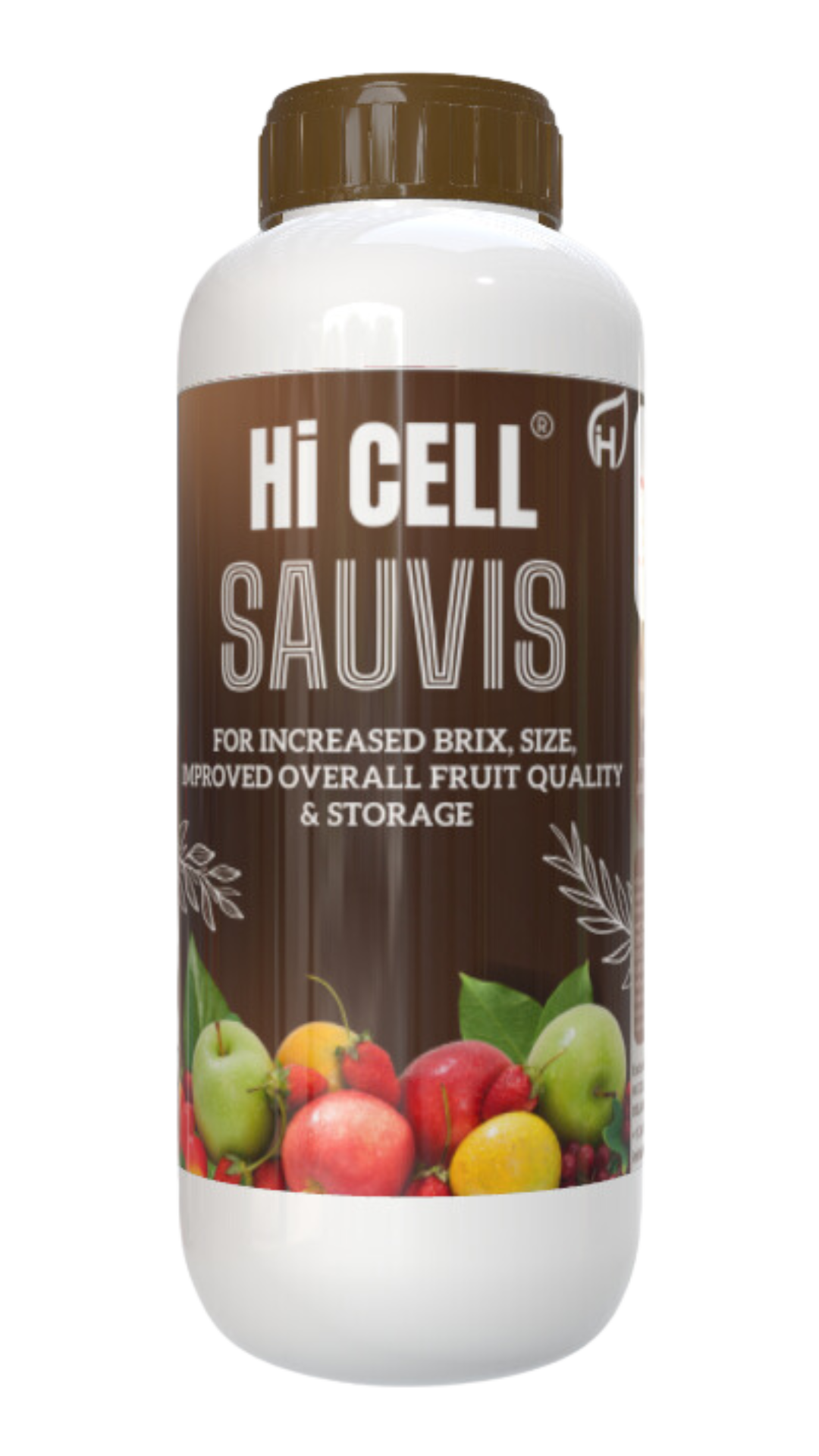
Hi CELL SUAVIS
Hi Cell Suavis is a botanical cell multiplier — a new class of crop biological that improves fruit by increasing the number of cells a fruit forms, not just their size. Where gibberellic acid (GA) works by stretching existing cells, Suavis drives genuine cell multiplication, building fruit that is larger, denser and better equipped to store sugar.
Applied pre-harvest as a foliar spray during the critical cell-division window, Suavis increases fruit size across a remarkable range of crops — both non-climacteric fruits such as cherries, grapes and strawberries, and climacteric fruits such as apples and other pome fruits. More cells mean more size, better structure and greater sugar-storage capacity, translating into higher Brix and firmer, more marketable fruit.
The result is fruit that grades higher, commands a better farm-gate price, and meets the size and sweetness specifications premium and export markets demand — a single botanical lever for size, quality and value, working with the plant's own biology rather than forcing it.
Efficacy
Applied pre-harvest — as a foliar spray around 15 days before picking — Suavis increases fruit size by roughly 15% in grapes and cherries. Timed to the fruit's final swell, its cell-multiplying action adds genuine volume and structure, moving fruit up through the size grades that determine farm-gate price and export eligibility. A 15% size gain is rarely marginal: in graded crops it can shift a whole consignment into a higher, better-paid bracket.
Applied post-harvest, Suavis takes on a different and unusual role — lifting the Brix of fruit that arrives below specification. In crops such as Fuji apples and seedless grapes, it raises sugar content after picking, a capability with almost no precedent in non-climacteric fruit, which normally cannot sweeten once harvested. This makes Suavis especially valuable for fruit picked with below-par Brix, rescuing consignments that would otherwise be downgraded or rejected on sweetness at the point of sale.
Together, these two modes give growers a single tool to build size before harvest and recover sweetness after it — protecting both grade and value across the supply chain.